Custom Shop vs Boutique Builder vs Partscaster: What Actually Matters
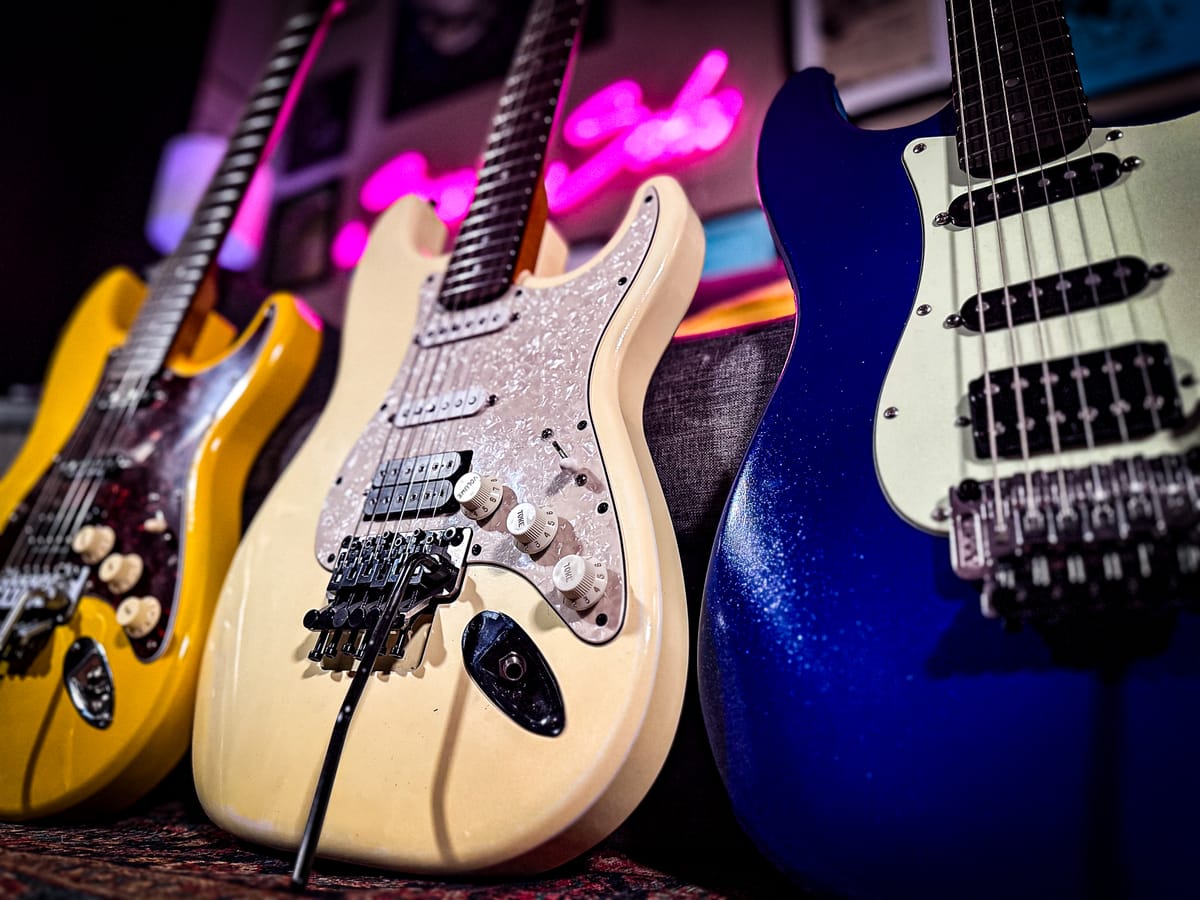
If you spend any time in guitar forums or comment sections, you will eventually run into the partscaster debate. Someone posts a guitar they love, someone else asks who made the neck, and suddenly the conversation is about whether the instrument is "real" or "just a partscaster."
I build custom guitars for a living, and I think the entire framing of this debate is wrong.
The word partscaster gets used as a dismissal — like if a builder did not personally wind the pickups, carve the neck from a raw plank, and forge the bridge saddles by hand, the guitar does not count. But if that is the standard, then almost nothing counts. The question is not where every component came from. The question is whether the finished instrument plays great, sounds right for the player, holds up on the road, and has someone standing behind it when something needs attention.
That is what working musicians actually care about. Not supply chain purity.
The labels do not mean what people think they mean
There are generally three categories people throw around when talking about custom or semi-custom guitars: custom shop, boutique builder, and partscaster. Here is what those labels actually describe in practice.
Custom shop usually refers to the in-house custom division of a major brand — Fender Custom Shop, Gibson Custom, PRS Private Stock. You are paying for the brand name, access to exclusive specs and finishes, and (in theory) a higher level of craftsmanship and quality control than the production line. Prices typically start around $3,500 and go well past $7,000.
Boutique builder describes independent builders and small shops producing guitars outside the major brand ecosystem. Some build everything from scratch. Some source components from specialty suppliers. Some do both depending on the build. The common thread is that you are working directly with the person building your guitar, and the instrument is built to your specs rather than selected from a catalog. Pricing varies widely but tends to land between $1,200 and $3,500 for a professional-grade instrument.
Partscaster is the loaded term. It originally described guitars assembled from aftermarket parts — a Warmoth body, an Allparts neck, whatever hardware and electronics the builder chose. The implication, fair or not, is that a partscaster is just bolted together rather than built with intent.
Here is the problem with these categories: the lines between them are nowhere near as clean as the labels suggest.
Every guitar is made of parts
This is the part of the conversation that gets uncomfortable for people who are attached to brand mythology.
No builder — not a one-person shop, not a mid-size company, not a major manufacturer — makes every single component that goes into a guitar. Tuning machines come from tuning machine manufacturers. Bridges come from bridge manufacturers. Pickups come from pickup makers (unless the builder winds their own, and even then the magnets and wire come from somewhere else). Pots, switches, capacitors, strap buttons, string trees, truss rods — all of these are sourced components.
The question of "who made the parts" is a spectrum, not a binary. Every guitar sits somewhere on that spectrum. A builder who carves necks from raw wood blanks but installs Gotoh tuners and CTS pots is using sourced parts. A major brand that manufactures bodies and necks in-house but sources every piece of hardware and electronics is using sourced parts. A builder who assembles top-shelf components from specialty suppliers into a cohesive instrument with expert setup and a personal warranty is using sourced parts.
They are all using parts. The difference is not in the sourcing. The difference is in what happens after the parts are selected.
What actually separates a good custom guitar from a bad one
If the labels are unreliable, what should a buyer actually evaluate? After building over 100 guitars for working musicians, here is what I think matters.
Intent and coherence
A great custom guitar is designed as a system. Every component is chosen to work together for a specific purpose — the player's tuning, string gauge, playing style, gigging demands, and tonal goals. The neck profile matches the player's hand. The hardware matches the player's maintenance tolerance. The electronics match the player's amp and pedal setup. Nothing is random.
A bad build — whether it costs $500 or $5,000 — is a collection of parts that happen to be attached to the same piece of wood. No coherent design intent. No consideration of how the components interact. That is the actual problem people are trying to describe when they use partscaster as an insult. They are not wrong that random part selection produces bad results. They are wrong that the solution is brand pedigree.
Setup and playability
A guitar can be made from the finest materials on earth and still play terribly if the setup is wrong. Nut slots cut to the wrong depth. Action that does not match the player's touch. Relief that was never dialed in for the string gauge. Intonation that was set once and never checked.
Setup is where a builder's expertise shows up most clearly, and it is the area that gets the least attention in the partscaster debate. Nobody argues about whether a builder cut their own nut blank from raw bone versus buying a pre-shaped TUSQ nut. But the quality of the nut slot work has more impact on tuning stability and playability than where the blank came from.
Post-sale support
This is the one that almost never comes up in forum debates, and it is arguably the most important factor for working musicians.
When something needs adjustment six months after delivery — and it will, because wood moves, climate changes, and playing style evolves — who do you call? With a major brand custom shop, you call a dealer or an authorized service center. With a boutique builder, you call the person who built it. With a partscaster you assembled yourself, you figure it out or find a local tech.
The value of a direct relationship with your builder is enormous. Not because the guitar will be perfect forever, but because no guitar is perfect forever, and having the person who built it available to help you dial it in over time is a level of support that most players have never experienced.
That is not a parts question. That is a relationship question.
Build quality and attention to detail
Fret ends that are smooth and do not catch your hand. A neck pocket that fits tight with no gaps. Electronics that are soldered cleanly and shielded properly. A finish that is applied evenly without runs or thin spots. Hardware that is mounted straight and functions without binding.
These are craftsmanship indicators, and they exist independently of where the components were sourced. A builder who sources a neck from a specialty supplier and then does flawless fretwork, a perfect setup, and clean wiring has produced a better instrument than a builder who carved the neck from scratch but left sharp fret ends and sloppy solder joints.
The hands that do the final work matter more than the hands that made the raw materials.
The real question to ask
Stop asking "is this a partscaster?" Start asking these instead:
Was this guitar designed as a coherent instrument for a specific purpose, or is it a random collection of parts?
Does it play well out of the case — action, intonation, tuning stability, fret quality, neck comfort?
Will the builder support me after the sale if something needs attention?
Does the builder have a track record of satisfied players who actually gig these instruments?
Is the guitar built to hold up on the road, or is it built to look good on a wall?
If the answers are yes, it does not matter whether the builder carved the neck from a tree in their backyard or sourced it from a specialist who does nothing but make exceptional necks. What matters is the finished instrument in your hands and the person standing behind it.
Where JTal Guitars fits
I will be direct about this because I think builders should be transparent about what they do and how they do it.
I build custom electric guitars for working musicians. Some components I make. Some I source from suppliers I trust. Every guitar is designed as a complete instrument for a specific player, set up to that player's specs, and backed by a level of post-sale support that my customer reviews speak to better than I can.
I do not pretend to manufacture every component in-house, and I do not think that matters. What matters is that every guitar I deliver plays great, sounds right for the player's context, holds up under gigging conditions, and comes with a builder who picks up the phone when you need help.
If that makes my guitars partscasters in someone's mind, I am fine with that. The musicians playing them do not seem to care what the internet calls them. They care that the guitar works.
Browse current builds or start a conversation about a custom order.
FAQ
What is a partscaster?
A partscaster is a guitar assembled from aftermarket or third-party components rather than built entirely by a single manufacturer. The term originally described Stratocaster and Telecaster-style guitars assembled from parts made by companies like Warmoth, Allparts, or Musikraft. In practice, the line between a partscaster and a custom-built guitar is blurry because nearly all guitar builders source at least some components from outside suppliers.
Is a partscaster as good as a custom guitar?
It depends entirely on who selected the parts, how they were assembled, and how well the guitar was set up. A partscaster built with high-quality components, expert assembly, a professional setup, and coherent design intent can be as good as or better than many production guitars. A partscaster thrown together with random parts and no setup expertise will usually disappoint. The quality of the finished instrument depends on the builder's knowledge and craftsmanship, not on where every individual part was manufactured.
Is a custom shop guitar worth the price over a boutique builder?
For working musicians, the value comparison often favors boutique builders. Custom shop guitars from major brands carry significant brand premium and can cost $3,500 to $7,000 or more. Independent builders frequently deliver comparable or superior build quality, better customization, direct builder relationships, and faster turnaround times at lower price points. The tradeoff is that major brand custom shops offer brand recognition and potentially higher resale value if that matters to you.
How do I know if a custom guitar builder is legitimate?
Look for real customer reviews from players who gig the instruments, photos of completed builds showing consistent quality, a clear and transparent process for ordering and payment, and a defined warranty or support policy. The best indicator is how the builder handles communication — a legitimate builder will answer your questions in detail, be transparent about timelines and pricing, and make it clear what happens if something needs adjustment after delivery.
Should I care where a guitar's components come from?
You should care that the components are high quality and well suited to each other, but the specific origin of each part matters far less than how they are selected, assembled, and set up as a complete instrument. A guitar is a system, and the quality of that system depends on design intent, assembly expertise, and setup precision — not on whether every part was made under one roof.