
The 10 Best Boutique Guitar Builders for Working Musicians (2026)
This guide covers ten custom electric guitar builders whose ordering paths, support models, and build philosophies are worth evaluating if you make a living (or serious side income) playing electric guitar.
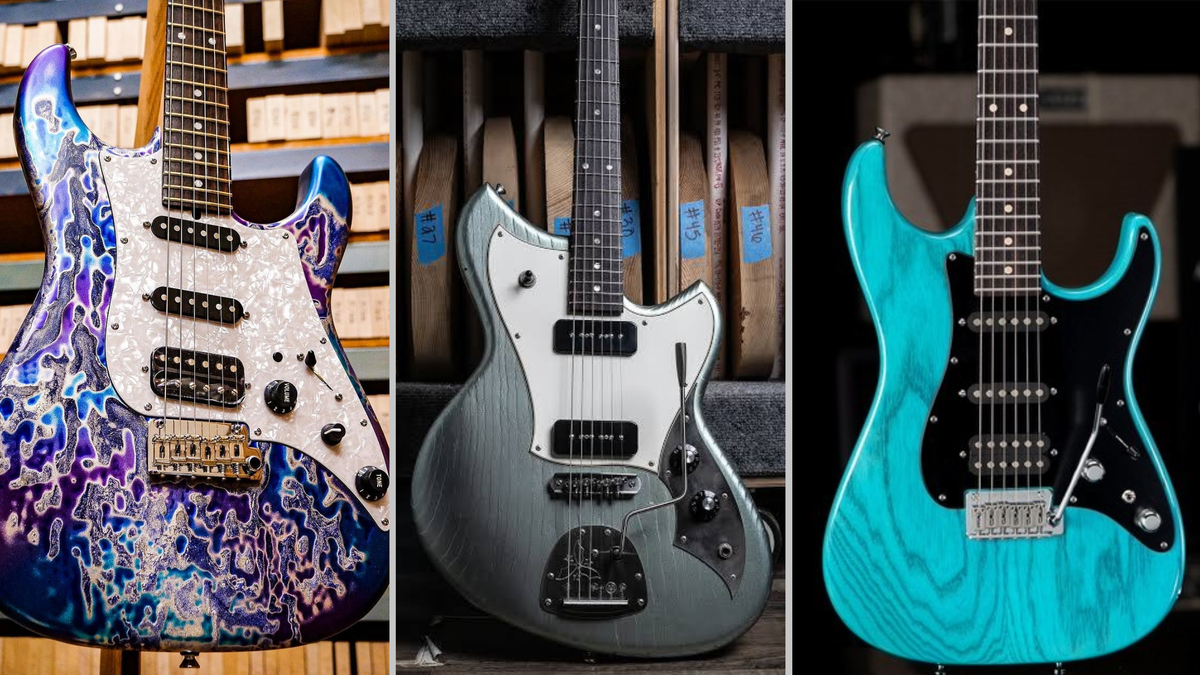
A working musician's guitar is a tool with a job description. It needs to stay in tune through a four-hour cover gig, sound right in a tracking session without fuss, and survive the back of a van six nights a week. Wall art it is not.
Ordering a custom electric guitar adds real risk to that equation. You are committing money months in advance, describing specs through email or a dealer, and trusting someone you may never meet to deliver an instrument that plays the way you need it to. The old tradeoff was custom feel versus predictable delivery. The better framing for 2026: choose your ordering process first, then choose your builder.
This guide covers ten custom electric guitar builders whose ordering paths, support models, and build philosophies are worth evaluating if you make a living (or serious side income) playing electric guitar. Every claim below comes from primary ordering pages, builder websites, or verified dealer documentation.
What Is a Boutique Guitar Builder?
A boutique guitar builder is a small-to-mid-size shop producing higher-touch instruments, typically with direct communication between the buyer and the builder or a small team. Customization ranges widely: some builders offer strict menu-based programs where you pick from defined options, while others will start from a blank page and build whatever you describe.
Buying paths vary, too. Some builders sell direct, some route everything through authorized dealers, and a few use a hybrid model. For working musicians, the buying path matters as much as the specs because it determines how fast you get answers, how deposits work, and who handles problems after delivery.
The 10 Best Boutique Guitar Builders for Working Musicians
1. James Tyler Guitars
James Tyler started out as a certified Fiat, BMW, and Alfa Romeo mechanic in Los Angeles before turning his tinkering toward guitars. He worked at Norman's Rare Guitars in the early 1970s, where he crossed paths with Seymour Duncan and began building a reputation for making instruments that played and stayed in tune better than anyone else in town. By the time he was 25, clients like Robin Trower and Robben Ford were bringing him work. By his late 20s, David Williams was playing a Tyler-modded guitar on Michael Jackson's "Billie Jean" (1982), and the LA session community had taken notice.
Session players needed guitars that stayed in tune while tracking with an orchestra staring at them. Tyler obsessed over that problem. As former Tyler General Manager Rich Renken has described in interviews, Tyler drilled deeper into the bridge block to enhance tuning stability, built spacers to replace string trees (before staggered tuners existed), cut and lubricated nuts in a way to prevent binding, and pioneered minimal-wrap string techniques to keep tuning stable under tremolo use. The setups alone started drawing players like Landau, Lukather, Dean Parks, Steve Watson, and Paul Jackson Jr.
Tyler's electronics package grew out of his network of friends and collaborators. A conversation with Seymour Duncan led to the development of hum-cancelling stacked single coils (the original Hot Stacks), which enabled series/parallel switching on single-coil-sized pickups. Dan Armstrong helped design the Lead/Rhythm switch, a four-pole double throw circuit that lets you jump from any pickup combination straight to the bridge in series with one toggle. James Demeter built the active midboost preamp, voiced with its bump around 100Hz and a high-end rolloff, which restores the low and high frequencies that a standard high-impedance guitar cable strips away. Together, these pieces gave a single Tyler guitar access to a wider range of voices than most players could get from three separate instruments, and all of it was in place before 1982.
Tyler sourced bodies and necks from Philip Kubicki in the early years, then from Tom Anderson, whose CNC capability allowed Tyler to cut his signature headstock shape. The headstock was designed to let the guitar hang straight on a strap (the offset nub balances the weight), and the logo running off the edge became an instantly recognizable silhouette. The "Shmear" finishes evolved from an accident: Renken was sanding down a turquoise metallic guitar and left it half-stripped. Tyler showed it to Landau, who liked the raw layered look. They added purple, red, and black, sanded it flat, and the multi-layer aesthetic became a Tyler signature. The Shmear technique was developed later as a refinement, using a different paint process that produces a marble-like surface.
James Tyler passed away on August 29, 2024. The company continues under General Manager Rich Renken, who first started working with Tyler at age 20 and returned to the shop around 2021. According to Renken, production has grown from roughly 300 guitars per year under Tyler to a target of over 600 under his leadership, with a team that includes builders from Fender's Custom Shop and Xotic. Custom orders are placed through authorized dealers such as Killerburst Guitars, Make'n Music, and Wildwood Guitars, where a spec sheet workflow guides your selections. The dealer typically replies with pricing and ETA within one business day. Lead times are not published and vary by dealer, so planning around a tour date requires early conversations.
Best for: Session-proven tonal versatility and electronics design with a 50-plus year track record rooted in the LA studio and touring community.
Pricing: Contact an authorized James Tyler Guitars dealer for current pricing.
2. Tom Anderson Guitarworks
Tom Anderson played guitar for a living in the LA area for about five years after high school, before disco killed the live work, and he needed a steady job. As Anderson has recounted in multiple interviews, he had known Dave Schecter and went on to work at Schecter Guitars from 1977 to 1984, learning production and parts manufacturing from the inside. When he left to start his own operation, the first six years were strictly bodies and necks for other builders. James Tyler, John Suhr, and several other names on this list were among the clients buying Anderson parts during that era. Hersel Blankenship, one of Schecter's original partners, convinced Anderson to start selling complete guitars through his Lab Sound store in LA, and by 1990, Anderson had committed to building whole instruments.
The company now produces roughly 1,200 guitars per year out of Newbury Park, California, running 24 instruments per week. That is up from 16 to 18 per week for decades prior. Anderson has described the growth as deliberate and organic: they have always had more orders than production capacity, so expansion came through process improvement rather than pressure to sell more. The staff supports 24 families, and employee tenure is remarkably long. The head polisher retired in 2024 after 38 years with the company.
Necks are machined on Haas vertical mills (Anderson was the first woodworker to buy one of these metalworking machines), then sit for a full month to let the wood stress-relieve before final surfacing. Anderson builds in .025 inches of relief and uses a single one-piece truss rod, which he believes sounds better. Before fretting, the fingerboard is resurfaced under simulated string tension using a dedicated fixture, and frets are dressed under tension the same way. The goal is to lose as little fret material as possible and start with a surface that is already true under playing conditions.
The A-Wedge neck joint replaced the traditional four-bolt design starting in 2004. It is a trapezoidal tapered wedge shape where the joint itself does the alignment work, not the screws. Two 10-32 machine screws thread into steel inserts inside the neck, generating roughly ten times the holding power of wood screws. The neck can only sit in one position and cannot shift in any direction. Eliminating the neck plate also allowed Anderson to contour the heel into a smooth, rounded shape for better upper-fret access.
The UV-cured finish process was co-developed with Bob Taylor in the early 1990s, as Anderson has detailed in factory tour interviews. Anderson contacted Southern California Edison's technology center after hearing about UV curing of inks and coatings. He and Taylor visited the lab together, ran tests, and worked through the technical challenges over a couple of years. By roughly 1992, Anderson was running UV finishes in production. The process works like this: spray the coat, wait about 30 minutes for solvents to evaporate, then run the guitar through the UV chamber three times at 15 seconds each. Done. No weeks of curing, no racks of guitars offgassing, no shrinkage after buffing. The finish is dual-cured, meaning it is both catalyzed and photo-initiated, so even paint that soaks into the wood grain beyond the reach of UV light will still cure chemically. That solved the first major hurdle of applying UV finishes to bare wood.
Pickups are wound in-house on 1950s-era Steven's coil winders that Anderson modified with additional spindles and a traverse mechanism for precise control over winding speed, spacing, and layering. Each final assembler builds a complete guitar from body and neck through to intonation, rather than working a production line. The company also uses laser cutters for pickup fibers and for cutting switch slots and cavity routes through finished bodies, producing perfectly clean holes with no chipping.
Anderson offers a "Build Your Guitar" configurator on the website with dropdown spec sheets covering model families, including the Icon, Drop Top, Classic, T Icon, Cobra, Raven, and the newer Wolfhound (a thin-body design inspired by Anderson's own teenage experience with an early 1960s SG Special). Pricing is not published on the website, and dealer-based ordering is common. Marcus, Anderson's successor and business partner (a former Bay Area software executive who started as an Anderson customer in 2006), now handles administrative operations and does the first QC pass on every guitar. Anderson still plays every instrument before it ships and handles all CNC programming.
Best for: Engineering-driven consistency and refined S-style or T-style builds from a shop with nearly five decades of manufacturing experience and a configurator that lets you spec before you call.
Pricing: Contact a Tom Anderson authorized dealer or use the online configurator for spec details.
3. Shabat Guitars
Avi Shabat trained as a sound engineer in Israel before attending the country's first luthier school, a year-long program where a small group designed and built instruments together. He built a bass, got hooked, and started accumulating tools at home. As Shabat has shared in interviews, a visit to Los Angeles and a conversation with touring guitarist Sean Hurwitz, an early Shabat endorsee with major pop and rock touring credits, convinced him to move to LA and try to make it as a builder. He apprenticed at multiple guitar shops around town and then at a guitar company before launching his own brand. The very first Shabat guitar was a snakehead Telecaster built for a friend, a broadcaster-style build with a square control plate and two knobs. That guitar now hangs in a living room in Buenos Aires.
The shop runs with a total staff of five, producing around 300 guitars per year with plans to scale toward double or triple that over the next few years. Everything is done in-house: CNC machining for bodies, necks, and pickguards, hand-rasped neck shaping, and all finishing and relicing on site. Necks use quartersawn maple with a single-action truss rod, a configuration Shabat credits for both the stability his touring players depend on and the punch and attack the brand is known for. The nitro finish is standard across all models and is a deliberate choice: Shabat wants the guitar to age with the player rather than stay frozen under polyester. There is no color chart. You tell Shabat what you want and the shop mixes it.
Model families include the Lion (S-type), Lynx (T-type), Cheetah (super strat), Puma, Leopard (single-cut), and Bobcat, plus bass models. Most boutique shops specialize in one or two shapes. Shabat builds across all of them with the same build process and luthier involvement. Justin Derrico (Pink's touring guitarist) is primarily a Gibson-scale player, so the Lion JD was developed through a process of building two different models for comparison before settling on the final spec. Dweezil Zappa pushed the aesthetic further, requesting a horn detail on the Lynx DZ as an homage to Jeff Beck. Chris Traynor took Shabat baritones on tour with Bush and reported no tuning or truss rod issues through the run. Shabat guitars have appeared on Jimmy Fallon, every major late night show, the Hollywood Bowl, the Greek Theatre, and Dodger Stadium.
Shabat is close with Anderson's Marcus, Dave Friedman, and other LA builders. The guitar building community in LA is small enough that everyone knows each other and nobody feels like they are competing. Shabat can drive 20 minutes to Dweezil's house to brainstorm specs in person rather than working through email chains.
Ordering runs through authorized dealers (Andertons, Max Guitar, Angel City Guitars) or by contacting Shabat directly. There is no online configurator, so spec discussions happen via email or dealer conversations. Lead times and pricing are not published on the website; secondary sources suggest retail starts around $3,000 to $4,000+. If you want one builder who can cover an S-type, a single-cut, and an offset without switching shops, Shabat is worth the conversation.
Best for: Boutique quality across a wide range of body styles, with direct luthier involvement and strong artist-collaboration DNA, from a five-person LA shop that hand-rasps every neck and mixes every color from scratch.
Pricing: Contact a Shabat Guitar authorized dealer or Shabat directly.
4. Suhr Custom
John Suhr started out as a player who could not stop taking things apart. His first real exposure to guitar building came from watching Bob Benedetto (the jazz archtop builder) make him a replacement neck in Pennsylvania. Benedetto told him not to get into lutherie. That probably sealed it. As Suhr has recounted in numerous interviews, he wound up working as a cook in New York City while doing repairs and playing club gigs, and a chain of events involving a badly made roast beef sandwich led to Rudy Pensa giving him a shot as a repair guy at Rudy's Music Stop on 48th Street. He built that repair operation across multiple floors.
The amplifier side started because Suhr bought a Bob Bradshaw switching system (the same rig Lukather used), could not afford to have Bradshaw assemble it, got all the recommended amps and preamps, and did not like the core tones. So he started taking apart amps, studying tech books at the library, and modding Marshalls. Bradshaw heard the results, Lukather liked them, and Bradshaw talked Suhr into building a three-channel preamp. Van Halen wound up using it on an album. Bradshaw called back with roughly 200 orders at $1,800 each and told Suhr he had to move to California. That was 1991.
Suhr worked with Bradshaw for about three years on Custom Audio Electronics (CAE), then went to Fender as a Senior Master Builder. At Fender, he built Tweed Twins for Eric Clapton and learned firsthand that the cabinet wood affected the amp's tone as much as the circuit. As Suhr has described in interviews about the Clapton project, he blueprinted Clapton's original modified amp, had the original Triad engineer wind matching transformers at $350 each, had the same tech recone the same speakers, and it still did not sound quite right until they swapped the head into Clapton's original falling-apart Tweed cabinet. The sound lived in the wood. They ended up building replacements from 200-year-old pine.
Suhr founded JS Technologies (Suhr Guitars) in 1997 in what is now Lake Elsinore, California. The company was never intended to be a guitar factory. It grew out of the same frustration that started everything: Suhr wanted guitars that played in tune, stayed in tune, and did not fight the player. His approach was to fix every common problem a gigging musician encounters. Wider necks so strings stop falling off the edge (traditional Strats had wide string spacing on a narrow neck). Narrower bridge spacing at 2-1/8 inches, borrowed from his Floyd Rose days, applied across every model. Four-pole five-way switching wired so each pickup position sees the correct pot values and cap values: 500K volume with .022 cap for the humbucker, 250K with .047 cap for single coils. Each pickup sees what it would see in a dedicated instrument.
The Silent Single Coil (SSC) system is not a dummy coil and not a stacked humbucker. It is a low-impedance antenna that picks up hum and injects it out of phase into the signal. According to Suhr's published technical documentation, he built a Helmholtz coil to measure the hum characteristics of different pickups and then designed cancellation coils to match. The result is hum cancellation with minimal tonal impact. For P90s, which produce too much hum for the passive system to handle, Suhr makes a battery-powered version. If the battery dies, the hum returns but the guitar keeps working. It is not an active circuit.
Like Anderson, Suhr levels fingerboards under simulated string tension before fretting, so the fretwork starts from a true surface and minimal fret material is removed. Suhr uses vintage-style single-action truss rods and considers the neck and truss rod among the most important tonal contributors in the guitar, possibly more than the body. Stainless steel frets are standard. Staggered locking tuners eliminate the need for string trees (one less friction point). The company co-developed a locking saddle bridge with Trevor Wilkinson that locks the saddles in place to prevent the G-string slippage that causes tuning problems under tremolo use, without requiring fine tuners.
Every guitar ships from the same builders regardless of whether it is a Core Line, Modern Pro, Standard Pro, or full custom order. There is no separate custom shop. Suhr rejects more than half of incoming wood by weight alone. The factory now runs five CNC machines, a rebuilt spray booth, and full climate control. Kevin Suhr (John's son, UC-trained electrical engineer) handles all pedal and digital design and is increasingly involved in guitar production processes, representing the company's succession path.
Custom orders are routed through authorized Suhr dealers, where options and pricing are discussed directly. Model families span Classic S, Classic T, Modern, and more. The online configurator and weekly custom build gallery are useful for exploring options before starting a spec conversation with a dealer.
Best for: A problem-solving approach to guitar design where every spec decision exists to eliminate a specific frustration that gets between a musician and their playing.
Pricing: Contact an authorized Suhr dealer for options and pricing.
5. Kiesel Guitars
Kiesel is a third-generation family operation with a fourth generation already working in the building. Lowell Kiesel was a Midwest lap steel player who built his first guitar in high school woodshop and founded the L.C. Kiesel Company in 1946 in Los Angeles, making pickups wound on his wife Agnes's sewing machine. When dealer markups proved unsustainable for both company and customer, the Kiesels closed the original business and relaunched as Carvin to sell direct without contractual restrictions. The first full mail-order catalog shipped in 1954, establishing the direct-to-consumer model the company still runs today. Mark Kiesel (Lowell's son) took over the guitar and bass division around 1970. Jeff Kiesel (Mark's son) entered production and design around 2013, and the company rebranded from Carvin to Kiesel Guitars on February 1, 2015. Jeff's children Zach and Kayla are now involved in marketing and production respectively.
The Escondido, California factory runs about 60 employees across 21,000 square feet, producing roughly 4,000 custom guitars per year. As Jeff Kiesel has detailed in factory tour videos, staff tenure runs deep, with multiple employees past the 20-, 35-, and 40-year marks. Kiesel buys raw lumber and kiln-dries it in-house rather than purchasing pre-dried billets. They also run their own roasting oven after finding that pre-roasted wood from suppliers had chip-out and cracking problems. Neck blanks get thermal treated after kiln drying and slowly cooled over 3-5 weeks for stress relief before a customer even places an order.
Every neck is quartersawn maple regardless of price point, which triples the per-neck wood cost due to yield loss. Carbon fiber reinforcement rods and Jescar German-made fret wire are standard across the entire line, as are hand-applied copper foil shielding and brass machine screw inserts on back plates (so they never strip). The point Kiesel makes repeatedly: a $1,500 A2 gets the same structural and component specs as a $14,000 Kiesel Edition.
Kiesel winds all pickups in-house. The Lithium humbuckers were developed after Jeff benchmarked them against Lundgren pickups and kept rejecting prototypes until the sound matched that tier. The pickup lineup spans Lithium, Beryllium, Imperion, Thorium, and artist-specific models for Allan Holdsworth and Frank Gambale.
The online Custom Builder is one of the best virtual configurators in the instrument world. You can see exactly what your guitar will look like before ordering, save builds, share them, and compare options. Standard build time is 8 to 14 weeks. Kiesel Edition builds (hand-selected tops, Jeff's personal finish work) run roughly 3 years from interest to delivery. Most standard builds ship with a 10-day trial period and a 5-year limited warranty. Custom finishes done by Jeff are non-returnable.
The artist roster includes Stephen Carpenter (Deftones), Devin Townsend, Sophie Lloyd, and Jason Becker, alongside legacy associations with Allan Holdsworth and Craig Chaquico. Kiesel has become arguably the dominant force in production headless guitars, with headless models making up a significant share of output.
Best for: Full-custom spec control with a visual configurator, 8-to-14-week build times, and a factory that puts the same quartersawn necks, carbon fiber rods, and component quality into a $1,500 guitar as a $14,000 one.
Pricing: Starts around $1,500 for stripped-down models. Priced and ordered through the Kiesel website or by calling the factory directly.
6. Friedman Guitars
Dave Friedman is an amp builder who came to guitars through the same path as John Suhr: decades of building rigs and amplifiers for professional touring musicians, then applying that signal-chain knowledge to the instrument itself. Friedman grew up in Detroit, obsessed not just with guitar playing but with why Angus Young sounded different from Tony Iommi, why Eddie Van Halen sounded different from Judas Priest. As Friedman has described in interviews, he moved to Los Angeles around 1987 and went to work for Andy Brauer Studio Rentals, a company that carted gear to recording sessions all over LA. Brauer's inventory became Friedman's education: every Tweed Fender, every blackface, every modified Marshall, every Hiwatt. When the shop's rig builder left, Friedman stepped in and started building guitar rigs for Eddie Van Halen, Steve Stevens, Jerry Cantrell, Richie Sambora, Joe Bonamassa, Dave Grohl, and dozens more.
The amp side developed through mentorship from Bruce Egnater (the IE4 preamp was a Friedman/Egnater collaboration) and design work for other companies including the front end of the Budda Superdrive series. Around 2009, Friedman started making his own amps, originally under the name "Marsha" until a cease and desist from Marshall prompted the rebrand to Friedman. The first product became the BE-100, which remains a flagship. The two core sound families are the BE series (hot-rodded British rock) and the Dirty Shirley (vintage, JTM45-based, round and fat). Friedman designs every circuit, lays out every PCB, and final-tests, plays, and signs every amp before it ships. He also handles all customer service personally. The amps are built by Boutique Amps Distribution under license.
Friedman's guitar line launched in partnership with Billy Row from Rock and Roll Relics, who handles the aging and relicing work. Models include the Cali (S-type and T-type shapes) and a growing graphic/shredder series featuring star guitars, diamond patterns, racing stripes, and 80s-inspired paint jobs, all with nitro finishes and relic treatment. Friedman makes its own pickups: the Classic Plus (around 8K, PAF territory), the Triple D (snarlier, JB-adjacent), and the M80 (a reproduction of the vintage Jackson J80 13K pickup that Friedman says may sound better than the original). At NAMM 2026, Friedman sold out every guitar at the show. Pricing runs in the high $3,000s for USA-made instruments.
Guitars are available through authorized dealers including Sweetwater, Rebel Guitars, and others. Shabat counts Friedman as a close friend, and the same network of working players that feeds Tyler, Anderson, and Suhr also feeds Friedman. The product line is expanding, with new finishes and models appearing regularly.
Best for: Rock players who want their guitar designed by someone who has spent three decades inside amplifiers, speaker cabinets, and touring rigs, and who voices every pickup accordingly.
Pricing: High $3,000s for USA-made models. Contact an authorized dealer.
7. Xotic Guitars
Xotic started in 1996 as a one-man operation in a San Fernando Valley garage. Founder Hiro Miura had dropped out of college in Japan at 19 to work for a custom guitar company, then spent years traveling between Japan and the US buying and selling vintage American guitars. He moved to Los Angeles permanently in 1986 and fell in with a circle of Japanese luthiers in California, including custom builder Taku Sakashta and legendary bass builder Nicholas Tung. That apprenticeship circle is where Miura learned to build, and in 1996 he launched Xotic as a bass-first brand with onboard preamps. The effects pedals came later (the EP Booster, AC Booster, RC Booster, and BB Preamp became pedalboard staples for session players worldwide), and the guitar line launched formally in 2015 under parent company Prosound Communications after Miura departed in 2014 to found Miura Guitars.
The California Classic guitar line includes two core models: the XSC (S-type) and XTC (T-type). Both are handbuilt in Los Angeles County with nitrocellulose finishes offered in four aging levels, from light to super heavy. The necks are roasted flame maple with an oil finish rather than a sprayed coat, which gives them a broken-in feel from day one. Hardware choices prioritize tuning stability: Gotoh locking vintage tuners with staggered posts eliminate the need for string trees, and Gotoh vintage-style tremolo bridges are fitted with Raw Vintage pure-steel saddles (Raw Vintage is Xotic's sister brand). Pickups are hand wound in the same LA workshop, with voicings spanning 50s, 60s, and PAF humbucker territory. The Allen Hinds artist series adds signature pickup configurations and neck specs developed with the LA session veteran. Guitar World's review of the XSC-2 noted that the roasted maple neck and out-of-the-box setup were standout qualities. MusicRadar compared the playing experience to instruments from Eggle and Suhr rather than a standard Fender.
The Xotique Master Grade tier offers fully custom builds for players who want options beyond the California Classic menu. Street pricing for the California Classic line runs around $2,500 and up through dealers. Custom orders are handled through the Xotic website or through authorized dealers, with international buyers directed to regional exclusive dealers.
Best for: Vintage-voiced S-types and T-types with hand-wound pickups and boutique-grade aging at a price point that undercuts most other builders on this list.
Pricing: ~$2,500+ street for California Classic models. Contact dealer for custom/Xotique pricing.
8. Iconic Guitars
Iconic was founded in 2012 in Carlsbad, California by Kevin Proctor, who came to guitar building from a background in electrical work and engineering management rather than traditional luthiery. Proctor built the team around specialists: builders with decades of hands-on experience, a finisher who started as a customer (buying Iconic #0010), and an artist relations lead with 13 years of touring experience.
In early 2025, Iconic recruited John Cruz, a former Fender Custom Shop Master Builder, to collaborate on a limited Studio Series line. The Solana Studio JC debuted at NAMM 2025 and immediately sold out. That collaboration concluded in November 2025 by mutual agreement, but all Cruz/Iconic instruments remain fully supported. The Studio Series continues with new configurations.
Models are named after California coastal towns near Carlsbad: Solana (double-cutaway S-type), Tamarack (single-cutaway T-type), La Playa (Les Paul-style set-neck), Carlsbad (modern bolt-on offset), and Leucadia (24-fret tilt-back headstock design). Iconic makes its own pickups. The online configurator walks you through body wood, neck wood (including thermal/roasted options), fingerboard material, radius, and electronics, then an email conversation finalizes the spec before you commit.
For working musicians weighing their first custom purchase, Iconic reduces risk in two ways most builders do not. U.S. sales are direct, cutting out dealer markup and giving you a single point of contact from spec to delivery. And the exchange program ("Buy it and try it. Don't love it? Exchange it for another, or a new build") means a spec miss does not become a $4,000 lesson. VR guitar tours are available via WhatsApp or Messenger for remote buyers who cannot visit the shop. Studio Series models have appeared at dealers like Eddie's Guitars at $4,999 for John Cruz-built instruments. Custom pricing varies by spec.
Best for: First-time custom buyers who want the safety net of an exchange program, combined with direct-to-consumer U.S. pricing and a model range that spans S-type through Les Paul-style and offset designs.
Pricing: Studio Series from ~$4,999 at dealers. Custom builds: contact Iconic directly.
9. Luxxtone Guitars
Luxxtone is built around one guy: Jerry Bizon. He landed in Los Angeles in the late 1990s and spent years touring the world as a guitar tech for major artists. That led to working at other guitar companies, then opening his own repair shop in 2002. In 2011, he was approached to start his own brand. Every Luxxtone guitar is a custom creation from Bizon personally.
Models span S-types, T-types, set-neck dual humbuckers, offsets, and modern designs, all with comfort cuts that go beyond standard Fender contours. The Choppa S and Choppa T add deeper forearm contours, belly cuts, and reshaped neck heels for upper-fret access. The El Machete runs a set-neck with Floyd Rose or Tune-O-Matic options. Luxxtone develops proprietary hardware and winds its own pickups in-house, with pickups sold separately for players who want that voicing in other instruments.
Luxxtone publishes its pricing list as a downloadable PDF on the website, a rare move in boutique guitar building that lets you budget before initiating a conversation. Order forms are available on the site for spec clarity. And the "Available for Purchase" inventory section offers finished instruments for players who cannot wait for a custom build. For a working musician who needs a gig-ready boutique guitar by next month, that ready-to-ship option solves a problem most builders on this list cannot. Dealer pricing from secondary market and authorized retailers runs roughly $2,400 to $4,400 depending on model and options. Dealers include Rebel Guitars, WildCat Guitars, Haggerty's Music, The Music Zoo, SoundPure, and others.
Best for: Players who want published pricing, in-house pickups, and a ready-to-ship inventory option that bypasses the 3-to-12-month custom wait entirely.
Pricing: Published PDF pricing list on website. Street pricing ~$2,400 to $4,400+ depending on model and options.
10. JTal Guitars
JTal Guitars is a boutique custom electric guitar builder based in Elkhorn, Nebraska, in the greater Omaha metro area. The builder behind it is John Talman, a guitar player with over 35 years of playing experience who started building custom electrics in 2020. Talman is a player first and a builder second, and that sequence shapes every decision in the shop.
It started with a single instrument: a 1982 Telecaster left to Talman by his uncle, who had been a massive musical influence starting from when Talman began piano at age 4 and guitar at age 7. That Tele's nut slot had broken off the neck, and a replacement neck plus new parts got it playing again, but something was missing. Talman started obsessing over the details: where the string tree sat, a bridge pickup that went microphonic due to a fracture in the wax potting, a finish in need of proper restoration. What began as a single repair project turned into a full restoration, including re-potting the pickup, a Fiesta Red nitro refinish, and a long list of fixes that required investing in HVLP spray guns, nitrocellulose lacquer, and dusting off wax-potting knowledge he had not used in 20 years.
That rebuilt Telecaster led to the realization that he could do this for other players. But Talman set three conditions before moving forward. If he could not commit to all three with every build, he would not start the business.
The first: customer service that matches the price tag. Talman saw an industry where players were spending thousands on instruments but getting a buying experience equivalent to a $45 jacket at a mall. Beyond that, he saw beginners getting their early interest in guitar crushed by condescension in shops. As he puts it on the JTal blog, "It was like the guitar world had formed some sort of fraternity of experts and refused to let anyone else into the clubhouse."
The second: every guitar leaves set up and ready to play. Not as an add-on. As the standard. Talman points to a common disconnect in the industry: a $3,600 custom shop guitar hanging on a wall that plays like a garage sale find because nobody set it up after shipping. Every JTal guitar ships set up to the player's specs, including tuning, string gauge, action, relief, and intonation.
The third: build functional art, not art that happens to be a guitar. Talman has played vintage instruments valued well over $10,000 and owned guitars at every price point below that. His conclusion: expensive and beautiful does not mean it plays well. Every JTal build is designed so that the player's first reaction is, "I've never had a guitar play like this before." The guitar can look great after it functions well. If it does not function well, it belongs on a wall with the other collectibles.
The business has grown from that single rebuilt Telecaster to over 100 completed builds, with players across the country. Current model families include the Super Saturday and Tuesday Style platforms, with each build receiving a unique name and number. Past builds like the No. 1007 "Stay Gold Butch" and No. 1025 "Terrible Taxi" have video demos on the JTal homepage.
Ordering starts with email. You contact john@jtalguitars.com with as much detail as possible about what you want, and the conversation develops from there. The payment structure is straightforward: 50% deposit before the build begins, remaining 50% due at shipping. No configurator, no dealer intermediary. If the project is not something JTal can handle, the shop will say so and suggest a builder who can.
JTal also offers a full satisfaction guarantee: if you are not 100% satisfied, JTal issues a full refund and handles return shipping. That policy is stated on the website, not buried in fine print. For players who need a builder they can reach between tours, between sessions, or just to ask a question about their instrument years after delivery, JTal commits to that ongoing relationship.
You can read more about the builder's background and philosophy in The Story of JTal Guitars on the JTal blog, and explore what goes into spec decisions with the Custom Guitar Build Checklist.
Best for: Players who want a musician-built custom guitar with a full satisfaction guarantee, direct builder communication, and the kind of post-sale support that most shops stop offering once the invoice clears.
Pricing: Contact JTal directly at john@jtalguitars.com. All custom orders use a 50/50 payment structure: half before the build, half at shipping.
Summary Table
James Tyler Guitars
Session-proven pedigree and versatility
Dealer spec sheet workflow · Pricing: Unpublished
Tom Anderson Guitarworks
Consistency in S and T builds
Online configurator, dealer-based · Pricing: Unpublished
Shabat Guitars
Wide model range, boutique quality
Dealer or direct contact · Pricing: Unpublished
Suhr Custom
Dealer-supported, engineered precision
Dealer-routed customs · Pricing: Unpublished
Kiesel Guitars
Speed and configurator clarity
Online builder, 8-14 weeks · Pricing: Published (configurator)
Friedman Guitars
Amp-builder tone expertise, relic style
Dealer-based (Sweetwater, Rebel, others) · Pricing: Published (~$3,000s+)
Xotic Guitars
Vintage S/T with hand-wound pickups
Dealer or direct custom order · Pricing: Published (~$2,500+)
Iconic Guitars
Direct U.S. sales, full model range
Direct (U.S.), configurator + email · Pricing: Published (~$4,999+ Studio)
Luxxtone Guitars
Hot-rod S and T variants
Order forms, dealers, ready-to-ship · Pricing: Published (PDF list)
JTal Guitars
Working musicians, service-forward
Email-first, 50/50 payments · Pricing: Unpublished
Published = pricing visible on website or through standard dealer channels before initiating a conversation. Unpublished = requires a dealer quote or direct inquiry.
Buying Checklist for Working Musicians
Before committing money to any custom build, get clear answers on these points. Most of this information is not on builder websites, so ask during your first conversation with the builder or dealer.
Deposit and payment terms. How much is due upfront? Is the deposit refundable if the build has not started? What triggers the final payment: completion, shipping, or delivery? Kiesel requires 20% minimum. JTal uses a 50/50 split. Most dealers collect a percentage at the time of order and the balance before shipping. Get the terms in writing.
Build time and communication. What is the estimated lead time, and how firm is it? Will you receive progress photos or updates during the build? If the build runs late, how will you be notified? Only Kiesel publishes a standard ETA (8-14 weeks). For all others, ask directly and factor in a buffer if you are building around a tour date or recording session.
Returns and exchanges. Can you return the guitar if it does not meet expectations? Kiesel offers a 10-day trial. Iconic offers an exchange program. JTal offers a full satisfaction guarantee with return shipping covered. Many builders have no published return policy, which means you are relying on goodwill. Ask before you order.
Warranty and transferability. What does the warranty cover, how long does it last, and does it transfer if you sell the guitar? A non-transferable warranty reduces resale value. A warranty that excludes finish issues or normal wear may leave you exposed to the things most likely to need attention.
Setup expectations. Will the guitar ship set up and ready to play, or will you need to take it to a local tech? If set up, will they match your preferred string gauge, action height, and tuning? Some builders set up to house specs. Others, like JTal, set up to the player's individual specs before shipping.
Shipping and insurance. How will the guitar ship, and is it insured for the full value? Who bears the risk during transit: you or the builder? A $4,000 guitar shipped without full-value insurance is a $4,000 gamble on the carrier.
Humidity and finish care. What finish is on the guitar (nitro, poly, UV-cured, oil), and what are the care requirements? Nitro finishes are more vulnerable to temperature swings and rubber contact. Poly and UV finishes are more durable but may affect resonance differently. If you are gigging in varying climates, this matters.
Post-sale support and repairs. If something needs adjustment or repair after delivery, who handles it? Can you contact the builder directly, or do you go through a dealer? How responsive are they between purchase cycles? Builders who commit to long-term support in writing are a safer bet for working players than those who go quiet after the invoice clears.
How These Builders Were Selected
This list was built from primary-source ordering pages, not forum reputation or secondhand reviews. The selection criteria focused on factors that directly affect working musicians: whether a builder publishes lead times and deposit terms, how the ordering process works in practice, what post-sale support looks like, and whether the instruments are designed with stage and studio reliability in mind.
Both bespoke and menu-based custom programs were included to represent the full spectrum of how boutique ordering works in 2026. The list is weighted for risks that gigging and touring players face specifically: unclear delivery timelines, opaque pricing, and weak post-sale support. Builders with a mix of direct and dealer sales models were included to cover different buying preferences and budgets. Because most custom electric guitar builders require dealer quotes rather than publishing prices, budgeting often starts with used-market comps on Reverb and direct conversations with dealers before committing to a build slot.
FAQs
What is a boutique guitar builder?
A small-to-mid-size shop producing higher-touch instruments with direct communication between buyer and builder. Customization varies: some builders offer strict menus, others accept fully bespoke designs. Ordering models range from online configurators (Kiesel, Anderson) to email-first consultative processes (JTal, Shabat).
How do I choose the right boutique builder?
Match the builder's customization model to your spec needs. Configurator-based builders like Kiesel offer speed and visual clarity. Email-first builders offer more flexibility for unusual pickup combinations, specific neck profiles, or hardware choices driven by stage reliability. Check lead time, payment terms, and post-sale support before committing money. For any builder without a published ETA, ask directly during your first inquiry.
Are dealer-based customs better than direct orders?
Depends on what you value. Dealers add a support layer and sometimes faster access to inventory or demo models. Suhr routes all customs through dealers, which works well if you have a trusted local shop. Direct ordering simplifies communication and often reduces cost, as Iconic's U.S. direct model demonstrates.
How does boutique buying relate to gig reliability?
Gig reliability goes beyond build quality. It includes setup, serviceability, parts availability, and whether the builder supports you after the sale. Ask about communication cadence and what happens if something needs repair on the road. Builders who explicitly commit to long-term support tend to be better partners for working players than those who offer a warranty card and nothing else.
What is the difference between menu-based and bespoke custom programs?
Menu-based programs limit choices to predefined options, reducing ambiguity and speeding up the process. Bespoke programs start from a blank page. Several builders on this list fall between these two approaches, using email or phone conversations to scope specs within flexible but guided frameworks.